
When homeowners think about protecting their roofs, shingles are usually the first thing that comes to mind. However, what lies underneath the shingles is just as important.
At ABJ Roofing, we believe a reliable roofing system starts with proper installation and quality materials. One important component is ice and water shield, a self-adhering waterproof membrane designed to provide additional protection against water intrusion.
Although North Carolina doesn't experience the same harsh winters as northern states, ice and water shield still plays an important role in protecting homes from heavy rainfall, wind-driven rain, and occasional winter weather.
What Is Ice & Water Shield?
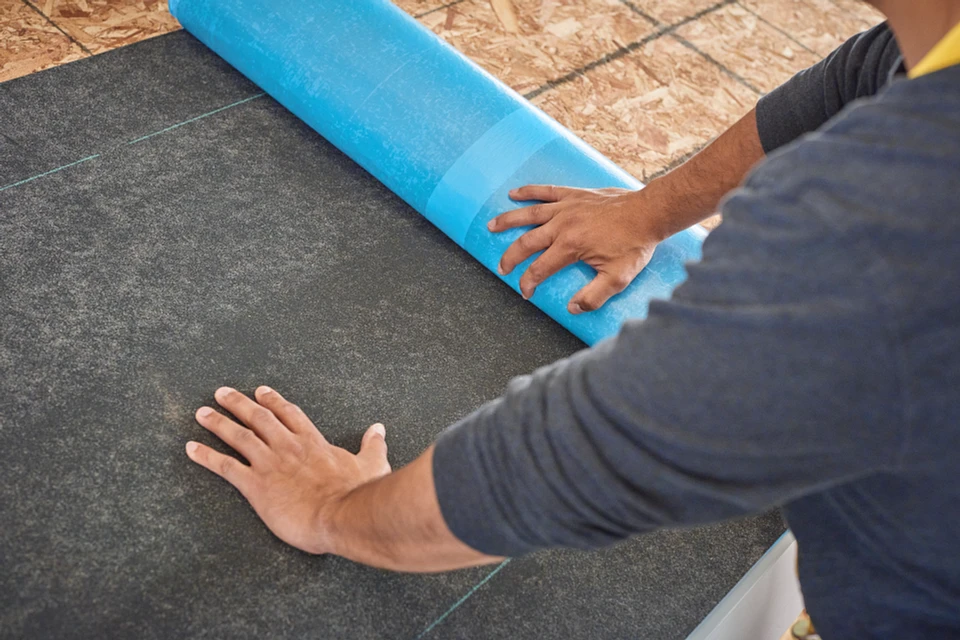
Ice and water shield is a self-adhering roofing membrane installed directly onto the roof decking before shingles are applied.
Unlike traditional synthetic underlayment, ice and water shield is designed to form a watertight barrier and seal around properly driven roofing nails, reducing the chance of water reaching the wood decking.
It's particularly useful in areas where water is more likely to collect, flow heavily, or penetrate the roofing system.
Where Should Ice & Water Shield Be Installed?
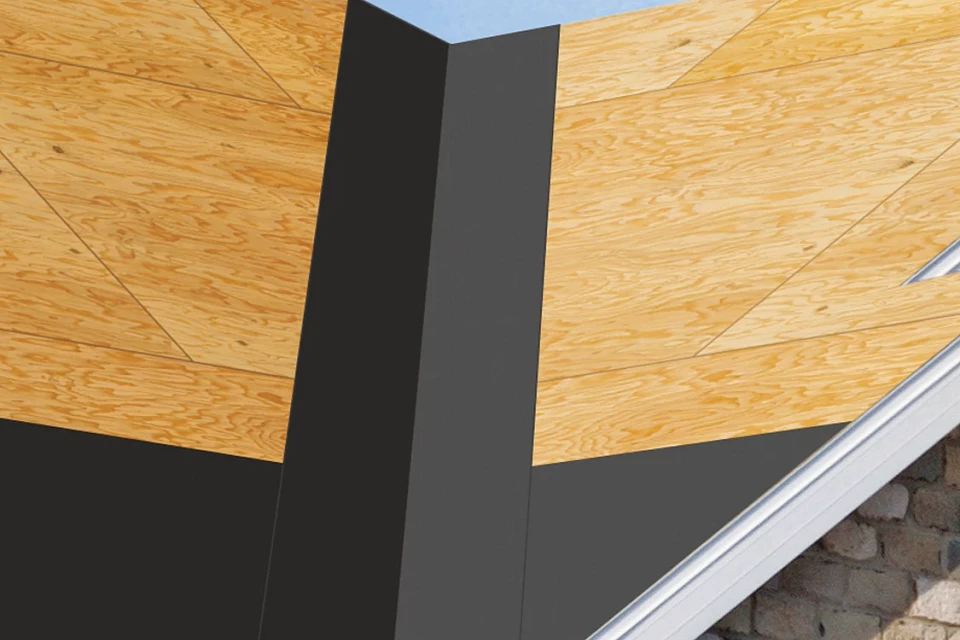
1. Roof Valleys
Valleys are where two roof slopes meet, concentrating rainwater into one area. Installing ice and water shield underneath the valley provides an additional layer of protection against leaks.
2. Roof Eaves
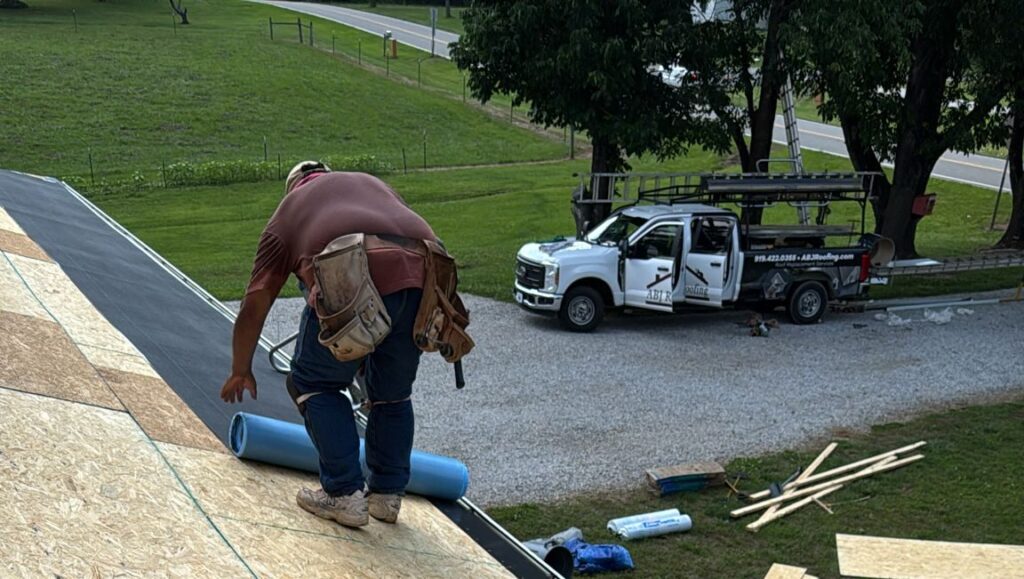
Eaves are vulnerable to water intrusion caused by ice dams and wind-driven rain. Ice and water shield can help protect the decking along these edges, especially during freezing conditions.
3. Around Roof Penetrations
Plumbing vents, chimneys, skylights, and other roof penetrations create potential entry points for water. Ice and water shield adds protection beneath properly installed flashing.
4. Low-Slope Areas and Roof Transitions
Water drains more slowly on lower-pitched roofs. Depending on the roof's slope and roofing system, additional waterproofing may be necessary. Some low-slope areas require a different roofing material altogether.
Why Is It Important in North Carolina?
North Carolina homeowners face several weather conditions that can put their roofs to the test.
- Heavy rainfall: Strong storms can bring significant amounts of water onto a roof in a short period.
- Wind-driven rain: High winds can push water beneath shingles, particularly around vulnerable roof details.
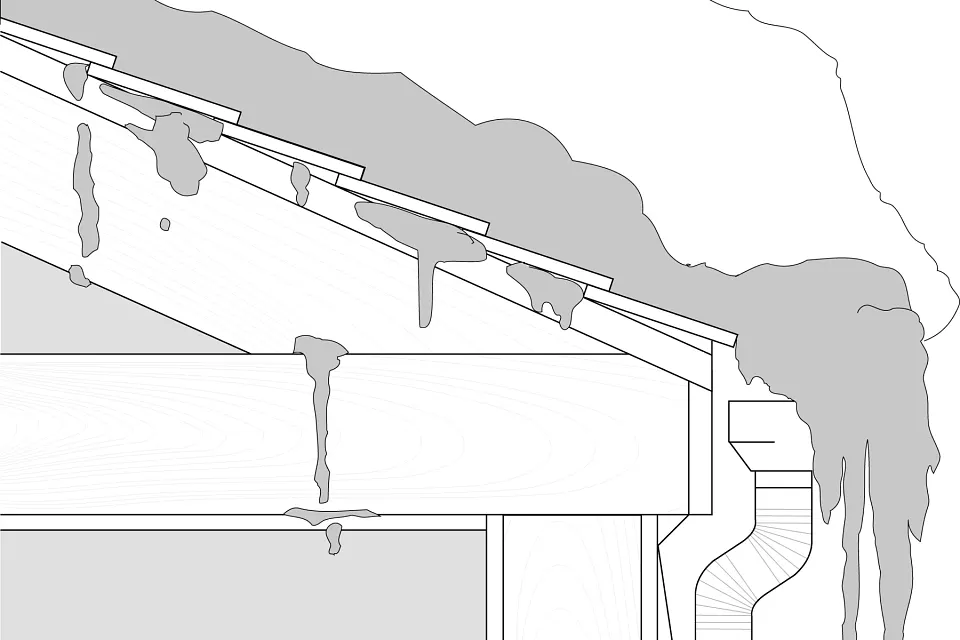
- Occasional snow and ice: Freezing temperatures can create conditions for ice dams, especially where heat escapes from the attic.
- Changing temperatures: Seasonal temperature fluctuations can contribute to the expansion and contraction of roofing materials.
For homeowners in Wake Forest, Raleigh, Durham, Cary, and surrounding communities, an extra layer of waterproofing can provide valuable protection.
Ice & Water Shield vs. Synthetic Underlayment
Both materials serve important purposes, but they aren't interchangeable.
| Feature | Ice & Water Shield | Synthetic Underlayment |
|---|---|---|
| Self-adhering | Yes | Usually no |
| Seals around nails | Designed to | Generally no |
| Water protection | Waterproof barrier when properly installed | Water-resistant secondary protection |
| Typical use | Vulnerable roof areas | General roof decking |
| Installation | Adhered directly to decking | Mechanically attached in most systems |
A properly installed roof often uses both materials together to create a more complete protective system.
Does Every Roof Need Ice & Water Shield?
Not every roof requires the same installation approach.
The appropriate placement depends on the roof's design, slope, local building code requirements, manufacturer instructions, and the roofing system being installed.
Even when not specifically required in certain locations, adding ice and water shield to vulnerable areas can be a worthwhile investment.
However, it is important to understand that ice and water shield does not replace proper flashing, ventilation, drainage, or correct shingle installation. All components must work together to keep the roof performing properly.
How ABJ Roofing Helps Protect Your Home
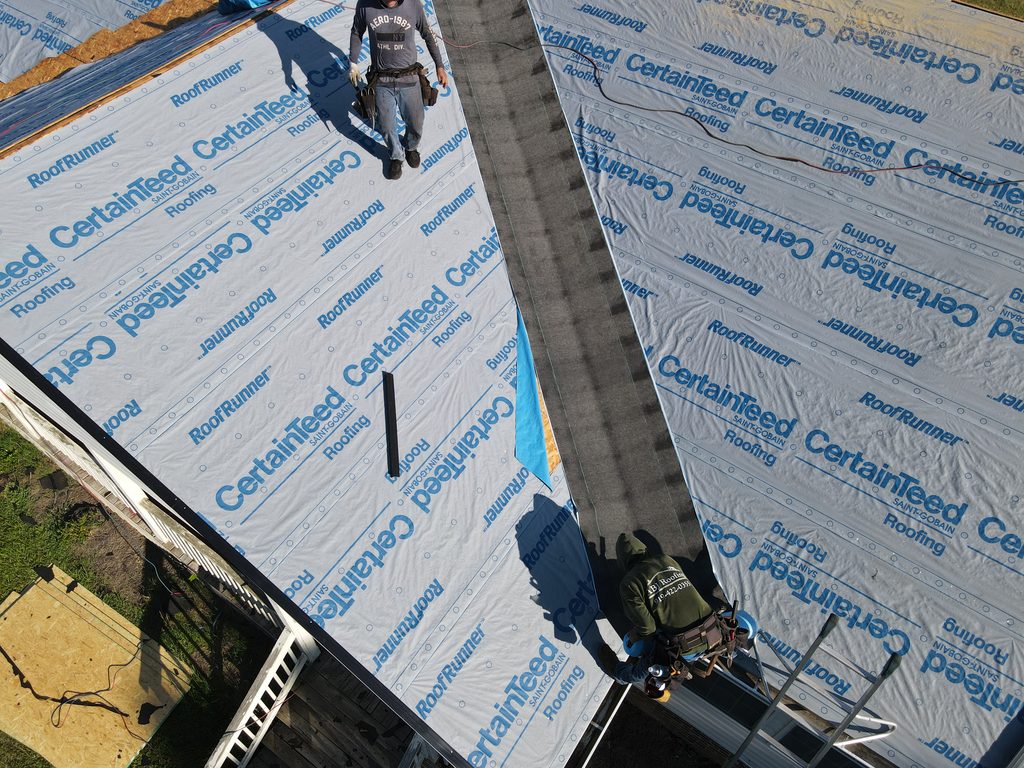
At ABJ Roofing, we understand that a roof is more than just shingles.
With over 25 years of roofing experience, our team focuses on installing roofing systems that provide reliable, long-term protection.
As a CertainTeed Shingle Master contractor, we use quality roofing materials and follow appropriate installation practices to help protect homeowners' investments.
Our roof replacement systems include synthetic underlayment and ice and water shield in designated vulnerable areas, such as roof valleys and around penetrations, with additional protection available depending on the roof's needs and project specifications.
Protect Your Home From the Inside Out
A beautiful roof is important, but the materials underneath are what help make it dependable.
Whether you're planning a full roof replacement or simply want to understand how your roofing system works, knowing the purpose of ice and water shield can help you make informed decisions.
Thinking about replacing your roof?
Contact ABJ Roofing today to schedule a roof inspection or request a free estimate.
Proudly serving Wake Forest, Raleigh, Durham, Cary, Apex, and the surrounding Triangle communities.