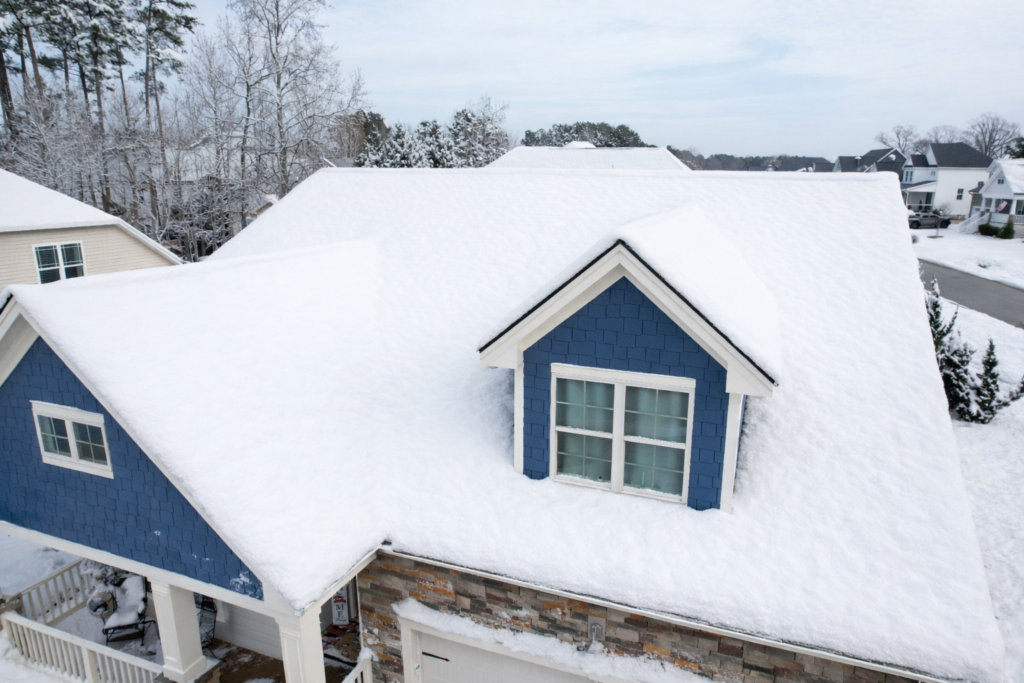
When winter weather hits hard, your roof becomes your home’s first line of defense. Recently, our team at ABJ Roofing has received a surge of service calls following the latest ice storms in the Greater Raleigh area. Many homeowners are experiencing leaks specifically in roof valleys and low roofs after snow and ice sat for weeks without melting. In most of these cases, the root cause is the same: inadequate or missing ice and water shield. If you want to protect your home, avoid costly repairs, and extend the life of your roof, opt for an ice and water shield during your next roof replacement in Raleigh.
Table of Contents
What Is Ice and Water Shield?
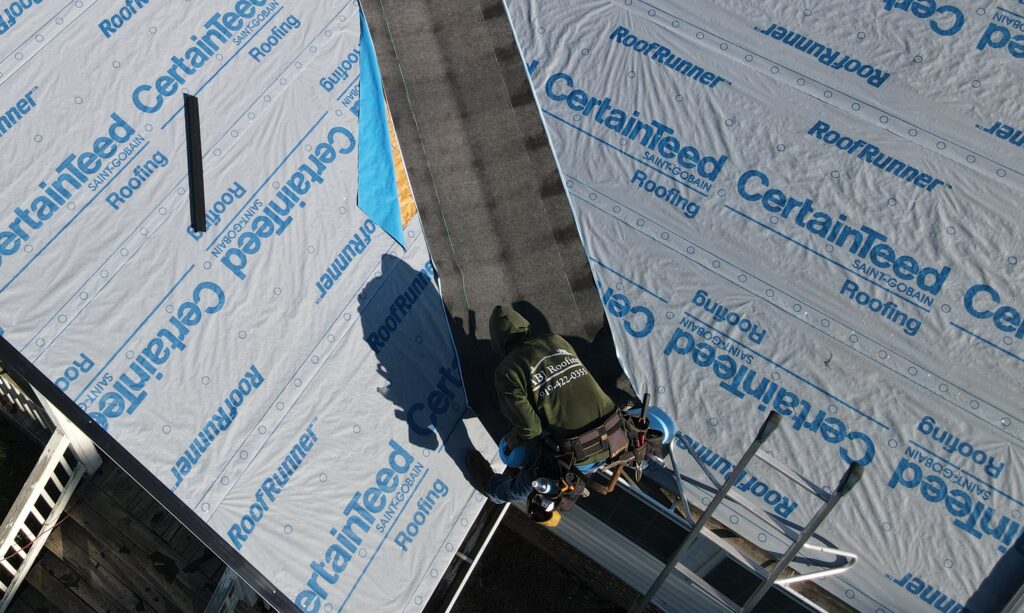
Ice and water shield is a self-adhering waterproof membrane installed beneath your shingles. Unlike standard roofing felt, this material seals tightly around nails and creates a watertight barrier in the most vulnerable areas of your roof. It is most commonly installed in roof valleys and around penetrations such as chimneys and skylights where the risk of water intrusion is highest. These areas experience heavy water flow and prolonged moisture exposure, which makes proper protection essential during severe winter weather.
Why Valleys Are Especially Vulnerable
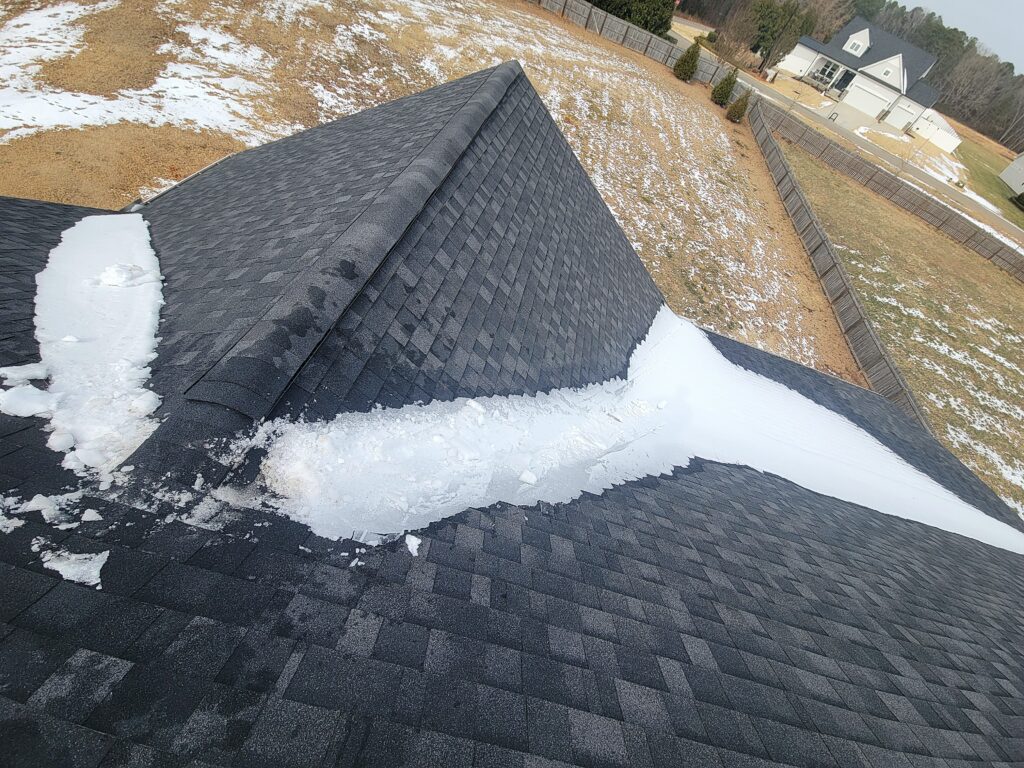
Roof valleys are designed to channel large amounts of water off your roof. During heavy snow and ice events, however, valleys often become problem zones. What we have been seeing recently is a pattern of snow and ice accumulating in the valley and beginning to melt during warmer daytime temperatures. When overnight temperatures drop, the water refreezes. Over time, ice builds up and traps additional melting water. Eventually, water backs up under the shingles, and leaks develop inside the home. Without proper ice and water shield protection, your roof system is much more likely to fail under these conditions.
Ice and Water Shield on Low Pitch Roofs
Ice and water shield is not just recommended in certain areas. It is required on low slope roofing systems. Any roof section under a 3.5/12 pitch is considered low slope and is far more vulnerable to water intrusion because water drains more slowly. On these roofs, shingles alone are not enough protection when water begins to sit or move sideways during heavy rain, snow melt, or ice buildup.
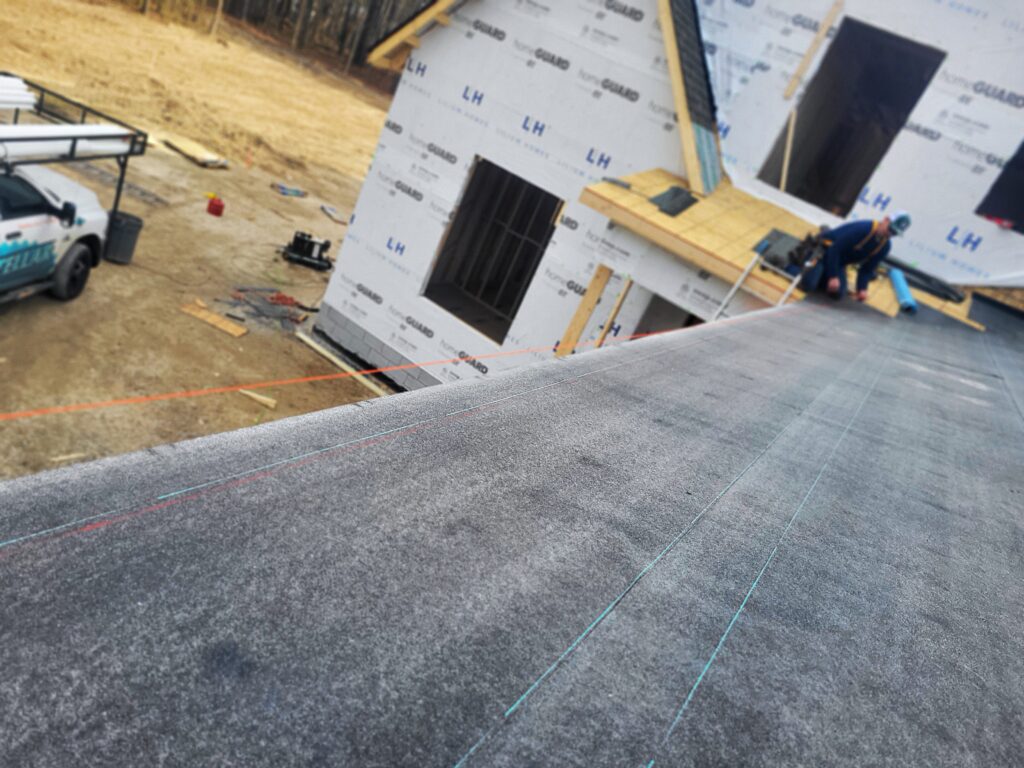
Because of this increased risk, building standards require ice and water shield on roof sections below a 3.5/12 pitch. The membrane provides a continuous waterproof barrier that protects the roof deck when water cannot shed quickly. Without this protection, low pitch roofs are significantly more likely to develop leaks, especially during winter weather events like the ice storms we have recently experienced.
At ABJ Roofing, we regularly see problems on low slope areas where proper waterproofing was skipped or installed incorrectly. If your home has any low pitch sections, making sure ice and water shield is properly installed is critical for long term performance.
Key Benefits of Ice and Water Shield
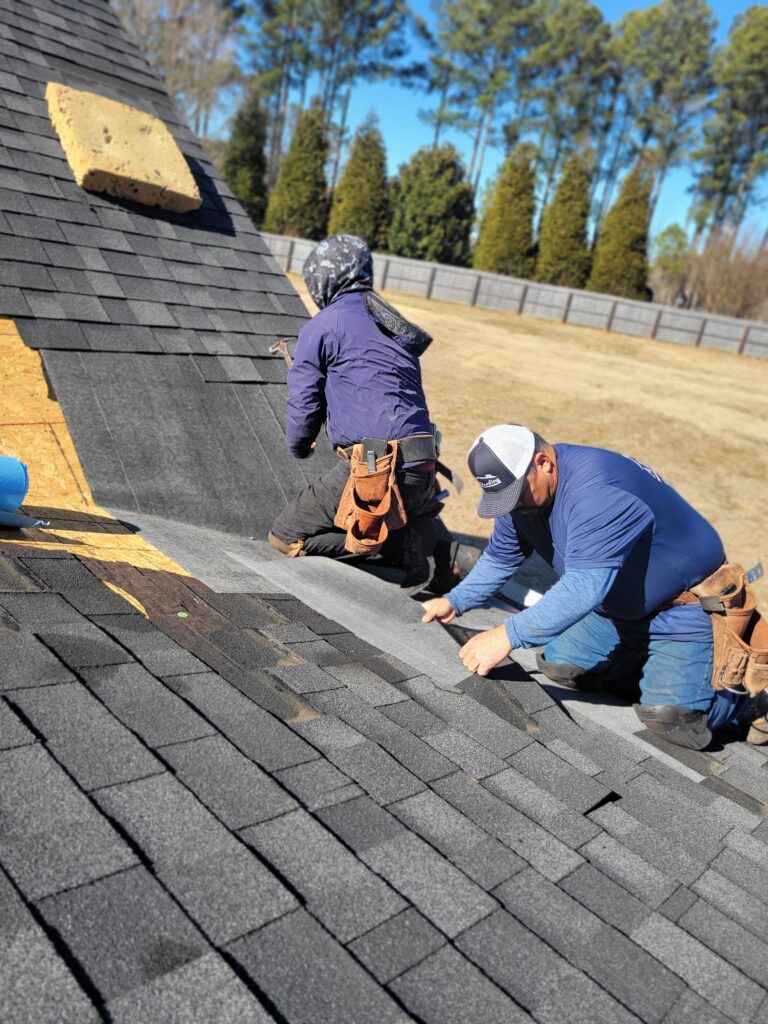
One of the biggest advantages of ice and water shield is its ability to prevent costly leaks when shingles alone cannot stop water intrusion. This becomes especially important during ice dam events when water is forced backward under the roofing system. Another major benefit is the self-sealing design. Because the membrane seals around nails, it blocks one of the most common leak paths in roofing systems. This added layer of protection is particularly valuable in high-risk areas like roof valleys. Ice and water shield also helps extend the lifespan of your roof by preventing hidden moisture damage.
When water intrusion is stopped at the underlayment level, the roof deck and surrounding materials remain in better condition over time. Perhaps most importantly, it provides peace of mind during storm season. When snow and ice sit on your roof for extended periods like we have recently seen, the extra protection makes a significant difference.
Do Not Wait Until the Next Ice Storm
Based on what we have seen after the recent storms, we strongly recommend full ice and water shield protection in all roof valleys and proper coverage around roof penetrations. Evaluating attic ventilation is also important to help reduce ice dam formation. Cutting corners in these areas may save money upfront, but it often leads to expensive interior damage later. If your roof valley has already leaked, that is a warning sign you should not ignore. Small leaks can quickly turn into mold growth, wood rot, insulation damage, and ceiling repairs.
ABJ Roofing provides professional roof inspections, repairs, and full replacements designed to protect your home year round. If you're in or around the Greater Raleigh area, contact ABJ Roofing today at (919)-671-4418 or by using the contact form below.
We Can Help You
"*" indicates required fields