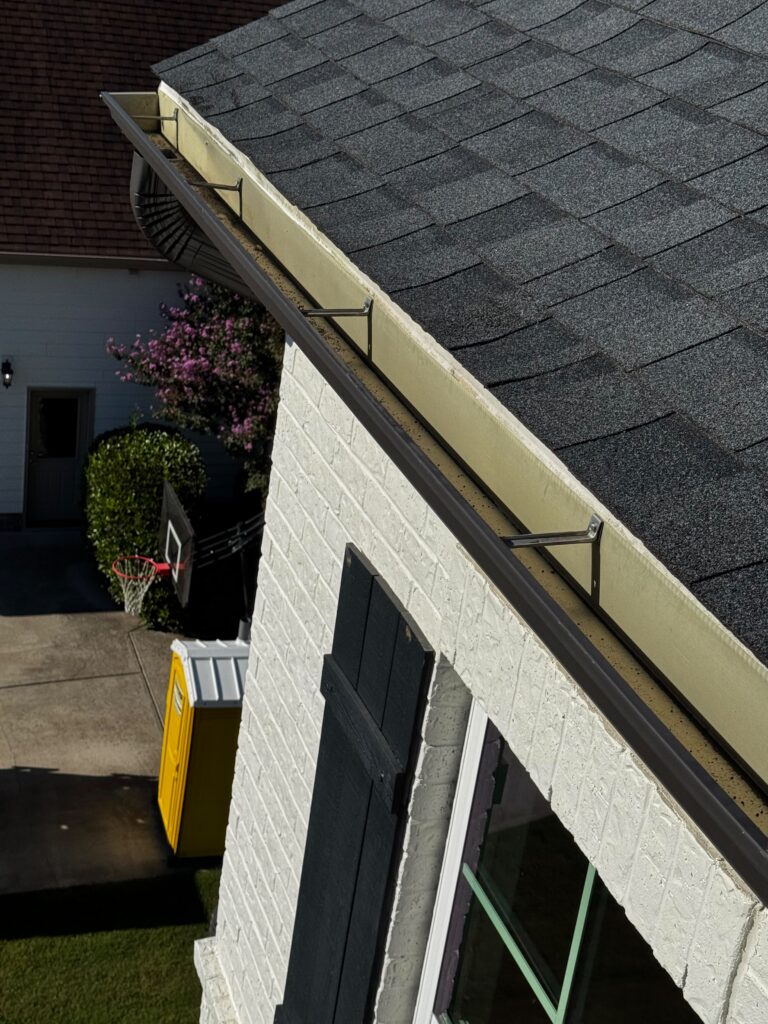
When most homeowners look at a roof, they notice the shingles first. But some of the smaller details along the edges of the roof can make a big difference in how well the entire roofing system handles water.
Two of those details are proper shingle overhang and drip edge.
When installed correctly, they work together to direct rainwater away from the roof decking and fascia and into the gutters. When they are installed incorrectly, water can get into areas where it does not belong, potentially leading to rotten wood, damaged fascia, and other moisture problems.
What Is Shingle Overhang?
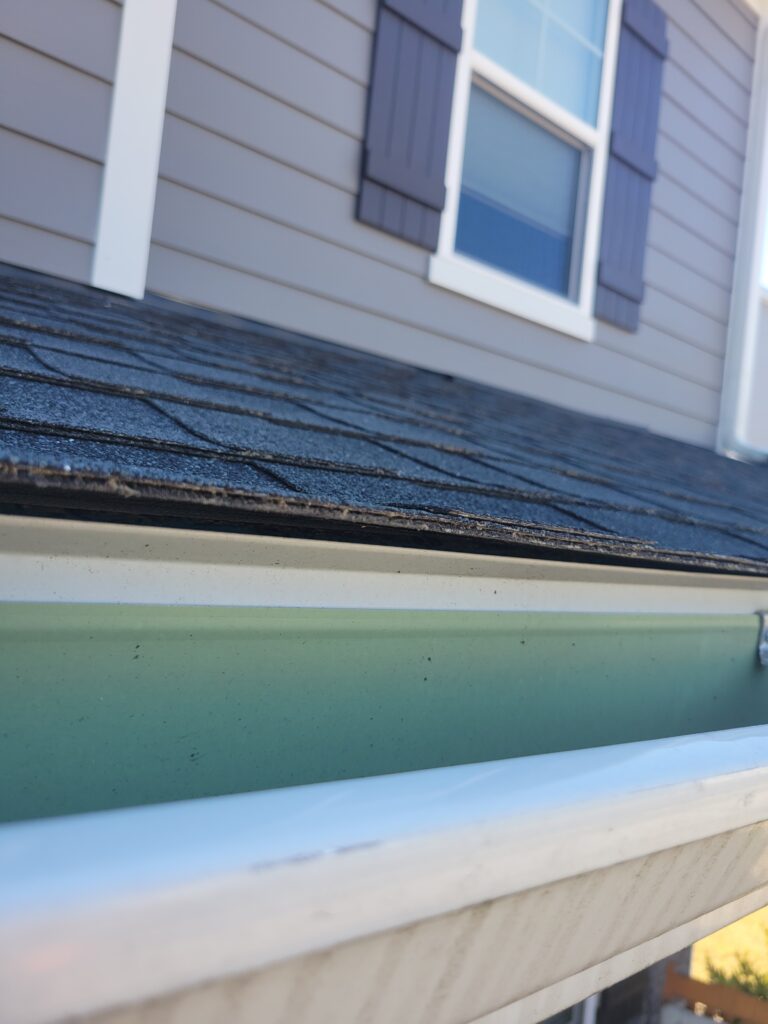
Shingle overhang refers to how far the shingles extend past the edge of the roof.
Shingles should extend slightly beyond the roof edge so rainwater can flow off the shingles instead of running back underneath them. However, more overhang is not necessarily better.
If shingles extend too far, they may not have enough support and can become more vulnerable to bending or damage. If they do not extend far enough, water may run behind the gutter or onto the fascia.
The goal is a properly installed edge that allows water to leave the roof efficiently.
What Is Drip Edge?
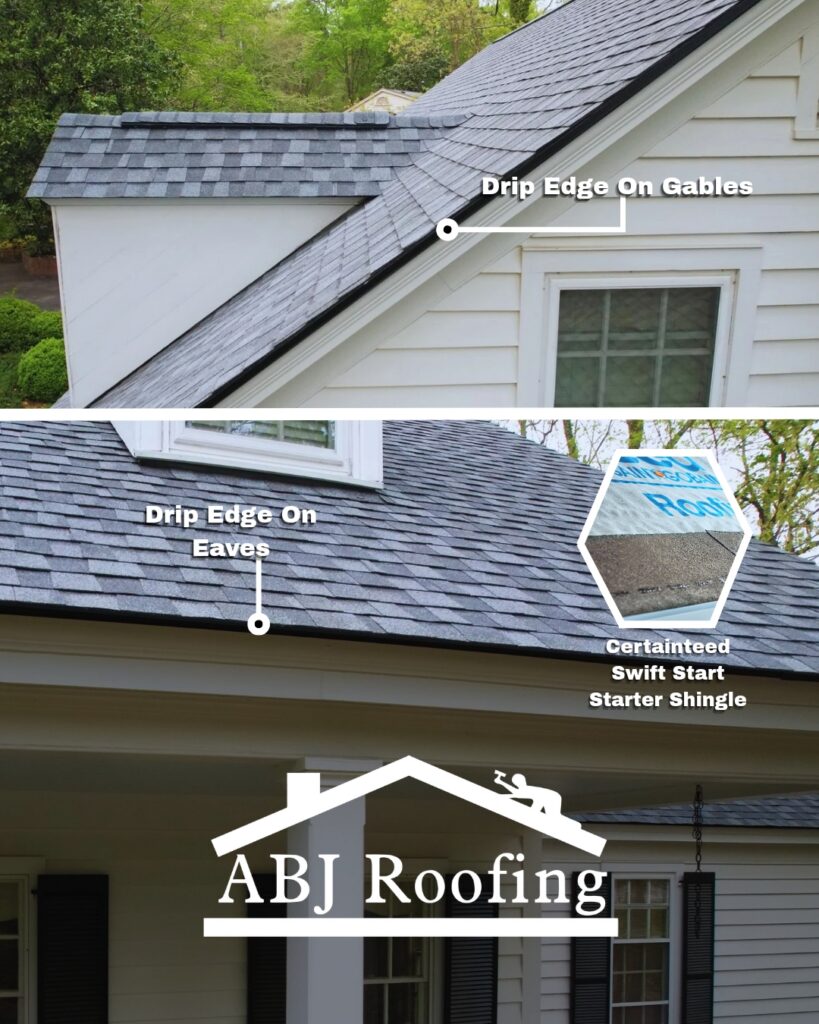
Drip edge is a metal flashing installed along the edges of the roof.
Although it may look like a small piece of metal, it serves an important purpose. Drip edge helps direct water away from the roof decking and fascia instead of allowing it to travel underneath the roofing materials.
It also helps protect the exposed edges of the roof decking from moisture.
How Shingle Overhang and Drip Edge Work Together
Think of shingles and drip edge as two parts of the same water-management system.
Rainwater travels down the shingles toward the edge of the roof. The proper shingle overhang helps carry that water beyond the roof edge, while the drip edge provides additional protection and helps guide water away from the wood underneath.
When gutters are installed, these components should also work together to help direct water into the gutter system.
What Happens When the Roof Edge Is Installed Incorrectly?
Problems at the roof edge may seem minor at first, but repeated exposure to rain can eventually cause significant damage.
Improper shingle overhang, missing drip edge, incorrectly installed drip edge, or poorly positioned gutters can contribute to:
- Water running behind the gutters
- Rotten fascia boards
- Moisture damage along the roof decking
- Damaged soffit
- Staining along the exterior of the home
- Premature deterioration of roofing materials
Sometimes homeowners do not notice the problem until the wood has already begun to deteriorate.
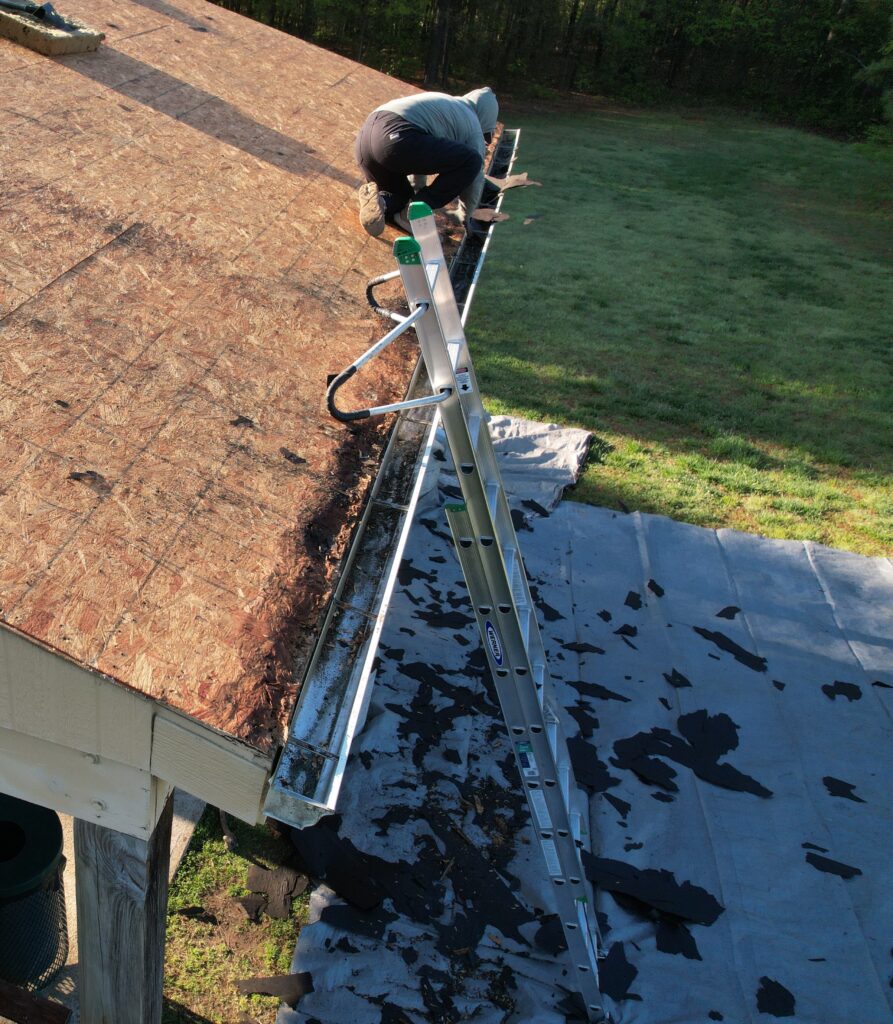
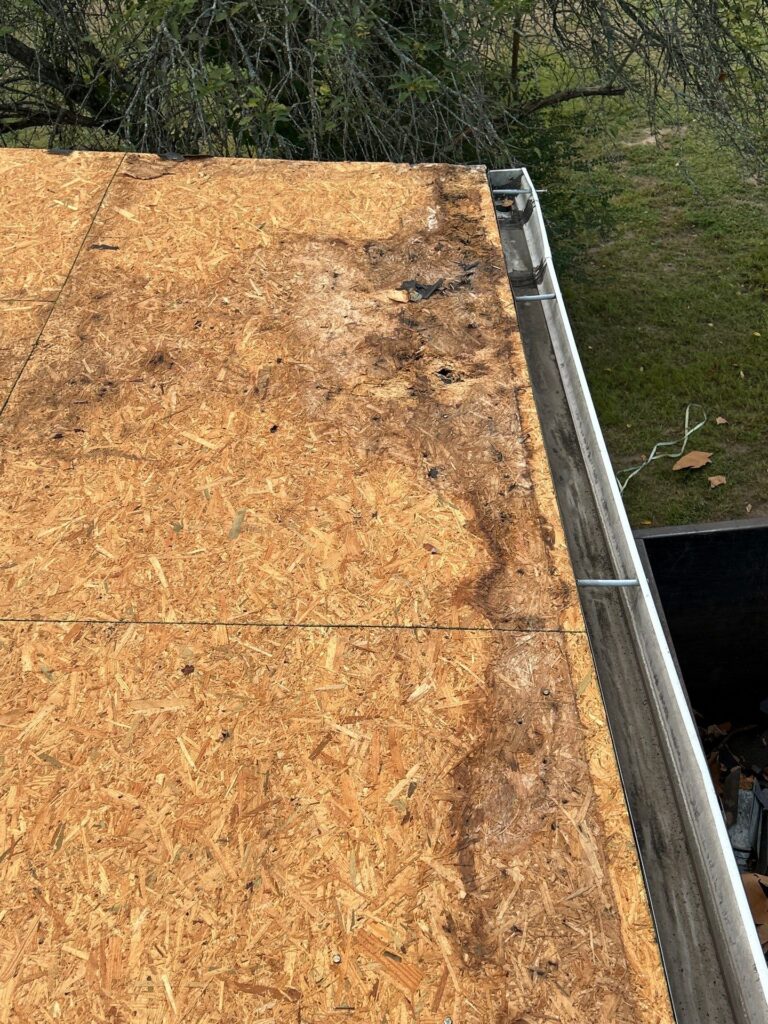
Gutters Matter Too
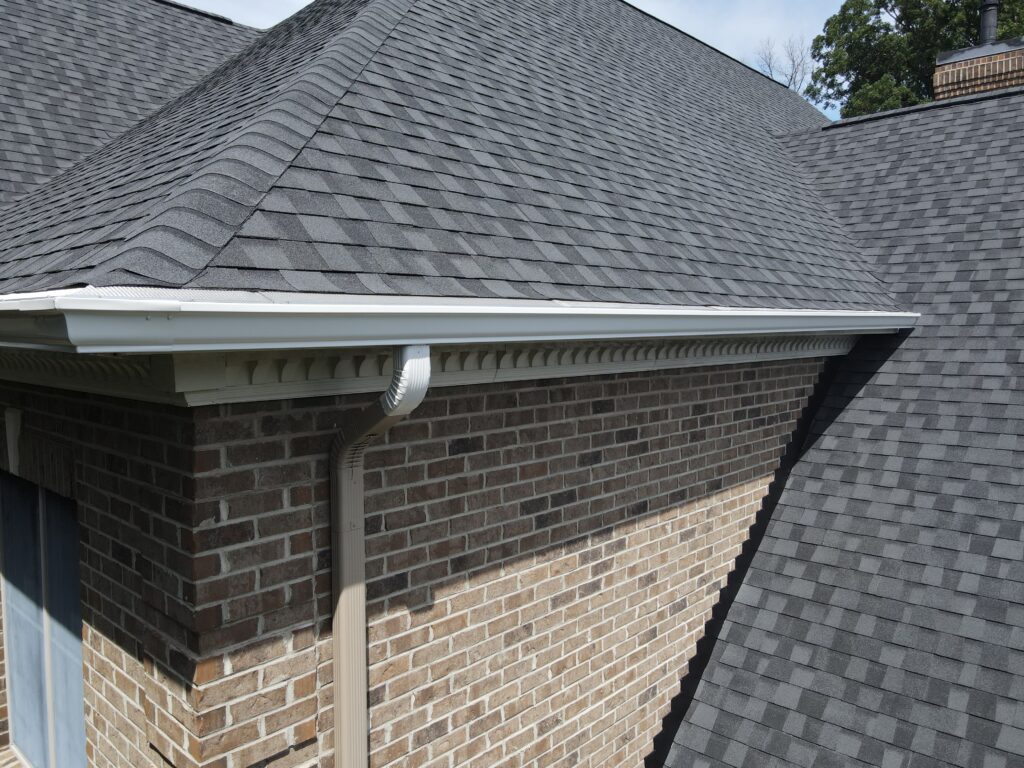
Even a properly installed roof edge can have problems if the gutters are positioned incorrectly.
Gutters need to be installed at the proper height and location so water coming off the roof can enter them. If a gutter is installed too high, too low, or incorrectly against the fascia, water may travel behind it rather than into it.
That is why the roof edge, drip edge, shingles, fascia, and gutters should be viewed as one complete system rather than separate components.
Small Roofing Details Make a Big Difference
A quality roof installation is about more than simply laying shingles. Proper flashing, drip edge, shingle placement, ventilation, underlayment, and water management all contribute to the performance of the finished roof.
At ABJ Roofing, we pay attention to these details because they can make a major difference in protecting your home from water damage.
With over 25 years of roofing experience, our family-owned company provides roof replacements, roof repairs, gutters, and other residential roofing services throughout Wake Forest, Raleigh, Durham, Cary, Apex, Youngsville, Garner, Henderson, Holly Springs, and surrounding Triangle communities.
If you are noticing water behind your gutters, damaged fascia, rotten roof decking, or problems along the edge of your roof, contact ABJ Roofing to schedule an inspection.